When to Install Skylight Shades in Des Moines: Timing Your Project Right
If you have skylights in your Des Moines or Ames home, the best time to address heat gain and UV damage is before Iowa’s intense summer sun turns your vaulted ceiling into a heat trap. Skylight shades in Des Moines block excessive solar heat streaming through overhead glass, protect your furniture and flooring from fading, and help reduce the strain on your air conditioning during those humid July and August stretches. Made in the Shade Des Moines & Ames specializes in skylight and vaulted ceiling blind solutions throughout the metro, serving homeowners from Urbandale to Johnston to the charming shops near Valley Junction in West Des Moines.
Many 1980s and 1990s contemporary homes throughout central Iowa feature cathedral ceilings with multiple skylights—a beautiful architectural choice that can become a liability without proper window coverings. If you have noticed your MidAmerican Energy bills climbing during summer months or seen sun damage on your hardwood floors, your skylights are likely the culprit. The good news: addressing this issue now, before peak summer heat arrives, means you will enjoy cooler indoor temperatures and lower energy costs when you need relief most.
Planning Your Skylight Shade Project: What Des Moines Homeowners Need to Consider
Assessing Your Skylights and Ceiling Configuration
Before selecting skylight covers for your Ames or Des Moines home, you need to understand what you are working with. Walk through your home and note how many skylights you have, their approximate sizes, and how high they sit above your floor. Cathedral and vaulted ceilings common in Urbandale and Johnston neighborhoods often place skylights anywhere from 12 to 25 feet overhead—far beyond the reach of standard ladders or manual shade controls.
Take note of your skylight orientation as well. South-facing and west-facing skylights receive the most direct afternoon sun during Iowa summers, making them the highest priority for heat-blocking solutions. East-facing skylights deliver morning light that is typically less intense but can still cause UV damage over time.
Understanding Your Options: Cellular, Roller, and Motorized Solutions
Skylight shades come in several styles, each suited to different needs and budgets:
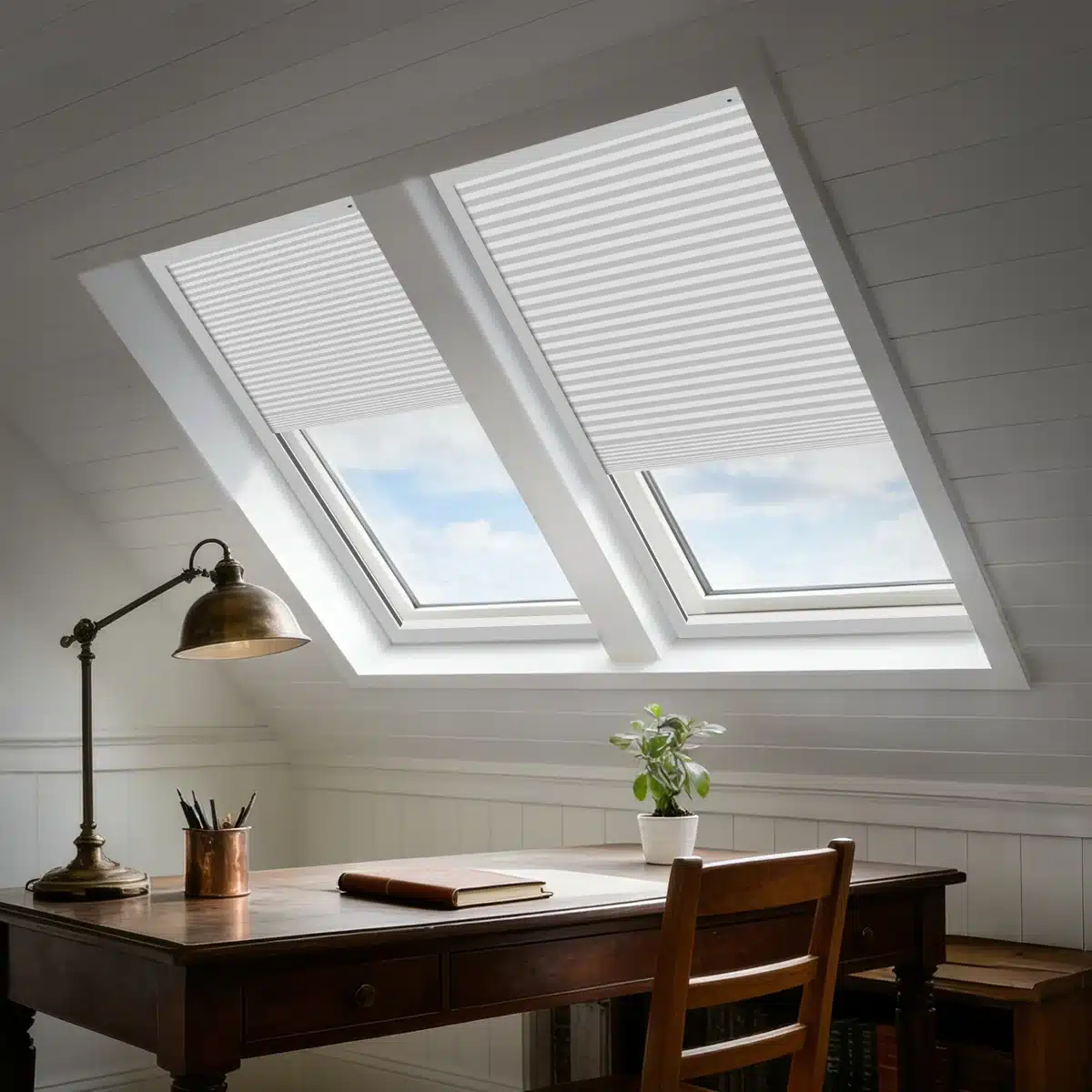
- Cellular (honeycomb) shades: The most popular choice for skylights because their air-pocket construction provides meaningful insulation. They trap a layer of air between your room and the glass, reducing heat transfer in both summer and winter.
- Roller shades: A streamlined option that sits closer to the glass. Available in light-filtering and room-darkening fabrics depending on whether you want to preserve some natural light or block it completely.
- Motorized skylight shades: Essential for vaulted ceiling blinds in Iowa homes where skylights sit well out of reach. Battery-powered and hardwired options both exist, and many systems integrate with smart home controls or wall-mounted remotes.
For most Des Moines homeowners with cathedral ceilings, motorized skylight shades represent the practical choice. Manually adjusting a shade 18 feet above your living room floor is simply not realistic without specialized equipment.
Budgeting for Skylight Shades in Des Moines
Skylight shade costs vary based on size, style, and whether motorization is included. As a general reference:
| Shade Type | Typical Price Range per Skylight |
|---|---|
| Manual cellular shade (reachable skylights) | $200–$450 |
| Motorized cellular shade | $450–$900 |
| Motorized roller shade | $400–$800 |
| Custom shapes (angled, arched, or oversized) | $600–$1,200+ |
These ranges represent general market estimates for professionally installed skylight coverings. Your actual cost depends on your specific skylight dimensions, ceiling height, and chosen features. Made in the Shade Des Moines & Ames provides free in-home assessments so you receive accurate pricing for your particular situation—no guessing required.
Choosing the Right Skylight Shades for Your Iowa Home
Heat Gain Control: The Primary Concern
Central Iowa summers deliver significant heat and humidity. When afternoon temperatures push into the 90s near Jordan Creek Town Center or out by Living History Farms, your skylights act like magnifying glasses, concentrating solar energy directly into your living space. The right skylight shade interrupts this cycle by reflecting or absorbing solar radiation before it enters your room.
Cellular shades with reflective backing provide particularly strong heat-blocking performance. The combination of insulating air pockets and a reflective surface facing the glass addresses heat gain from multiple angles. For homeowners struggling with hot spots beneath skylights, this construction makes a noticeable difference in indoor comfort.
UV Protection: Preserving Your Furnishings
Ultraviolet radiation fades furniture, artwork, flooring, and textiles over time. Skylights, because they point directly upward toward the sun, often deliver more concentrated UV exposure than vertical windows. If you have noticed discoloration on carpet, leather furniture, or wood flooring beneath your skylights, UV damage is the likely cause.
Quality skylight covers block a substantial portion of incoming UV rays. Even light-filtering fabrics that preserve some visible light typically block harmful UV wavelengths. Room-darkening fabrics offer near-complete UV blocking for spaces where sun damage is a serious concern.
Light Control and Privacy
Not everyone wants to eliminate skylight light entirely. Many homeowners throughout Des Moines suburbs appreciate their skylights for the natural illumination they provide—they simply want to moderate it during the hottest parts of summer days. Light-filtering cellular shades diffuse harsh sunlight into a softer, more even glow while still reducing heat gain.
For bedrooms with skylights, room-darkening or blackout shades ensure that summer’s early dawn light does not wake you at 5:30 AM. Motorized operation lets you open them gradually when you are ready to start your day.
Professional Installation: What to Expect in Your Des Moines Home
The Measurement Process
Accurate measurement is critical for skylight shades. Unlike standard windows, skylights often feature angled frames, unusual shapes, or mounting surfaces that tilt away from vertical. Made in the Shade Des Moines & Ames sends experienced installers who know how to measure these challenging openings correctly the first time.
During your free assessment, your installer will:
- Measure each skylight’s width, height, and depth
- Note the frame material and angle
- Assess ceiling height and access requirements
- Discuss your preferences for light control, fabric color, and operation method
- Provide a detailed quote covering all materials and installation
This process typically takes 30 to 45 minutes for homes with multiple skylights.
Installation Day
When your custom skylight shades arrive—typically two to four weeks after ordering—your installation appointment will be scheduled. For vaulted ceiling blinds in Iowa homes, installers arrive with the proper ladders, scaffolding, or lift equipment needed to reach your skylights safely.
Most skylight shade installations complete within a half-day, even for homes with four to six skylights. Motorized systems require slightly more time for wiring or battery installation and programming. Before leaving, your installer will demonstrate operation, explain maintenance, and ensure you are completely satisfied with the result.
“Skylights are wonderful architectural features, but they need proper window treatments to be truly livable in Iowa’s climate. The right shade transforms a skylight from an energy liability into an asset you can control.”
Maintaining Your Skylight Shades for Long-Term Performance
Routine Care
Skylight shades require minimal maintenance compared to other window treatments. Dust accumulates slowly on horizontal or angled surfaces compared to vertical blinds. A light dusting every few months—using a long-handled duster or a vacuum attachment on low suction—keeps cellular shades looking fresh.
For motorized skylight shades, battery-powered systems typically need new batteries every one to three years depending on usage. Hardwired systems require no ongoing power maintenance.
Seasonal Adjustments
Your skylight shade usage patterns will naturally shift with Iowa seasons. During summer months, keeping shades closed during afternoon hours significantly reduces cooling costs. In winter, opening shades on sunny days allows passive solar heating to warm your home, potentially reducing your MidAmerican Energy heating bills.
Some motorized systems offer programming features that automatically adjust shades based on time of day or even sun position—a convenient option for homeowners who want set-it-and-forget-it operation.
Get Started: Book Your Free Skylight Shade Assessment
If you live in Johnston, Urbandale, West Des Moines, Ames, or anywhere in the central Iowa metro, your skylights do not have to be a source of summer frustration. Made in the Shade Des Moines & Ames offers free in-home assessments where you will receive professional measurements, honest recommendations, and clear pricing—with no obligation to purchase.
Our team understands the specific challenges of 1980s and 1990s contemporary architecture throughout the Des Moines suburbs. We have the equipment, expertise, and manufacturer-backed products to solve your skylight heat and UV problems properly.
Book your free skylight shade assessment for your Des Moines or Ames home today! Call (515) 205-8066 to schedule, or request a consultation online. Whether you are near Jordan Creek Town Center, out toward Living History Farms, or anywhere in between, we bring solutions directly to your door.
Frequently Asked Questions
How much do skylight shades cost in Des Moines?
Skylight shade pricing depends on size, style, and motorization. Manual cellular shades for accessible skylights typically range from $200 to $450 per unit. Motorized skylight shades for vaulted ceilings generally run $450 to $900 each. Custom shapes or oversized skylights may cost more. Made in the Shade Des Moines & Ames provides free in-home quotes with accurate pricing for your specific skylights.
Can you install shades on skylights in vaulted ceilings?
Yes, skylights in cathedral and vaulted ceilings are excellent candidates for shade installation. Because these skylights typically sit 12 to 25 feet above floor level, motorized operation is usually necessary. Professional installers use appropriate lift equipment to reach high ceilings safely and ensure precise mounting on angled surfaces.
Do skylight shades really help with summer heat in Iowa?
Skylight shades meaningfully reduce heat gain by blocking or reflecting solar radiation before it enters your living space. Cellular shades with reflective backing are particularly effective because they combine insulating air pockets with a reflective surface. Homeowners often notice improved comfort and reduced air conditioning runtime after installation.
What type of skylight shade works best for bedrooms?
Room-darkening or blackout cellular shades are ideal for bedrooms with skylights. They block incoming light during early summer mornings when dawn arrives before 6 AM in Iowa. Motorized versions let you open shades gradually from bed when you are ready to wake up, rather than being jolted awake by bright overhead light.

