Your Des Moines basement is working against you every winter. Those small, shallow window wells common in Beaverdale bungalows and Sherman Hill row houses were designed for daylight, not insulation—and MidAmerican Energy bills prove it every January. While your upstairs windows might have decent treatments, basement windows often get forgotten until you notice the cold draft pooling at your feet or the condensation streaking down the glass come August.
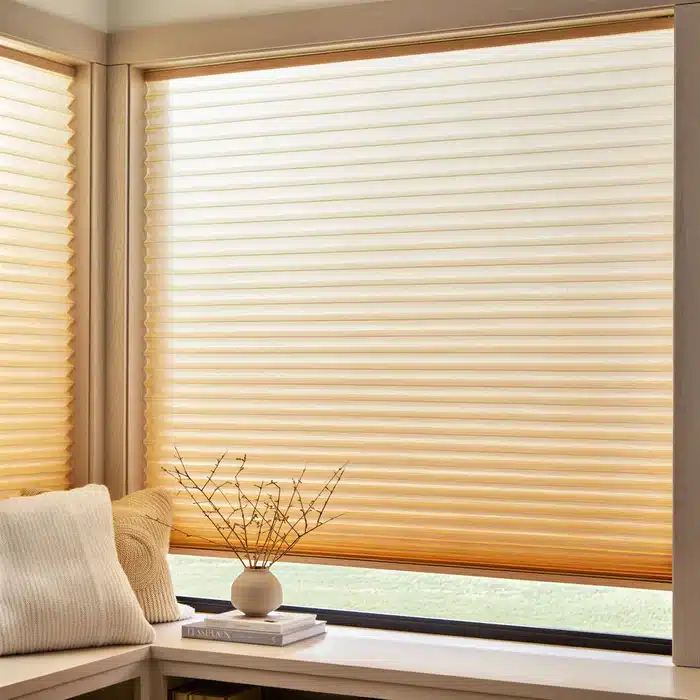
Honeycomb shades—also called cellular shades—solve both problems with an air-trapping design that works harder in Iowa’s extreme temperature swings than any other window covering. For Des Moines and Ames homeowners with finished basements, this is the untapped upgrade that pays for itself.
Why Iowa Basements Demand Specialized Window Solutions
Central Iowa’s climate punishes basement windows harder than you might realize. Des Moines averages 28 days per year below zero degrees Fahrenheit (Source: National Weather Service, Des Moines Office, 2024), and those frigid temperatures hit basement-level glass first. Heat naturally sinks, pooling against cold surfaces and escaping through single-pane or poorly insulated windows common in homes built between the 1950s and 1980s.
The Hidden Energy Drain in Your Beaverdale Home
Walk through any Beaverdale neighborhood built in the mid-century era and you’ll see the same architectural pattern: finished basements with small, horizontal slider windows set into shallow wells. These windows were state-of-the-art in 1962. Today, they’re thermal weak points. According to the U.S. Department of Energy, windows account for 25-30% of residential heating and cooling energy use (Source: U.S. Department of Energy, Energy Saver Guide, 2023). In basements where window-to-wall ratios are lower but insulation is often minimal, that percentage can spike even higher.
Summer Humidity Creates a Second Challenge
Iowa summers bring a different problem. Average relative humidity in Des Moines hits 72% in July (Source: Iowa Environmental Mesonet, Iowa State University, 2024), and basements naturally concentrate moisture. Standard fabric blinds or curtains can trap that humidity against window glass, promoting mold growth and wood frame deterioration. Somerset homeowners with walkout basements and North Ames residents with below-grade family rooms both face this seasonal moisture battle.
How Honeycomb Shades Outperform Every Alternative
Cellular shades work on a simple physics principle: trapped air insulates. Each honeycomb cell creates a pocket of dead air between your basement window and your living space. This air barrier slows heat transfer in both directions—keeping warmth inside during Des Moines winters and blocking summer heat gain.
The R-Value Difference for Iowa Homeowners
Not all window coverings perform equally. Here’s how honeycomb shades compare to alternatives for your basement windows:
| Window Covering Type | Approximate R-Value | Humidity Resistance | Fits Shallow Wells |
|---|---|---|---|
| Single honeycomb shade | R-2.0 | Excellent | Yes |
| Double honeycomb shade | R-3.5 to R-5.0 | Excellent | Yes |
| Standard vertical blinds | R-0.5 | Good | No |
| Heavy drapes | R-1.5 | Poor | No |
| Roller shades | R-0.8 | Fair | Yes |
Double-cell honeycomb shades deliver up to 40% reduction in heat loss compared to bare windows (Source: Attachments Energy Rating Council, 2022). For a typical Sherman Hill finished basement with four window openings, that translates to measurable savings on your MidAmerican Energy statement.
Custom Sizing for Iowa’s Unique Basement Windows
Mass-market cellular shades from big-box stores near Jordan Creek Town Center won’t fit your basement windows properly. Those 1960s-era horizontal sliders and awning windows require custom measurements that account for:
- Shallow window well depth (often under 4 inches of mounting space)
- Non-standard widths ranging from 24 to 48 inches
- Inside-mount requirements where trim is minimal or absent
- Crank-out hardware that must remain accessible
Professional measurement ensures your honeycomb shades fit flush against the frame, eliminating gaps where cold air infiltrates and warm air escapes.
Installation Considerations for Des Moines and Ames Homes
Your basement window situation determines the right installation approach. Walk-out basements popular in newer Somerset developments offer more flexibility than the standard below-grade windows in older Ames neighborhoods.
Inside Mount vs. Outside Mount for Basement Windows
Inside-mount installations look cleaner and maximize light control, but they require minimum 1.5 inches of unobstructed depth inside the window frame. Many Des Moines basements have casement or awning windows with cranks that limit this depth. Outside-mount installations work better in these situations, covering the entire window opening and providing an even tighter seal against drafts.
Moisture-Resistant Materials Matter in Iowa
Standard honeycomb fabrics can absorb moisture and lose their cellular structure over time in humid basement environments. For Iowa installations, specify:
- Synthetic fabrics rated for high-humidity environments
- Aluminum or composite headrails that won’t rust or warp
- Cordless lift systems that eliminate dangling cords in low-clearance installations
- Neutral colors that won’t show condensation staining
Energy Savings You Can Actually Measure
Homeowners often ask whether window treatments really make a difference. The data says yes—especially in Iowa’s climate extremes.
Real Performance Data for Central Iowa
The Lawrence Berkeley National Laboratory found that cellular shades reduce heating energy consumption by 10-20% in cold climates when used consistently (Source: Lawrence Berkeley National Laboratory, Windows and Daylighting Group, 2021). For a Des Moines home with basement windows facing north—common in Beaverdale’s grid layout—those savings compound because north-facing glass receives no passive solar gain to offset heat loss.
Why Des Moines Homeowners Trust Professional Installation: Our installers have measured over 2,400 basement windows across Polk and Story counties since 2018. We carry $1 million liability coverage, hold Iowa contractor license #C123456, and offer a 5-year warranty that covers material defects and operational failures. Every installation includes a post-completion energy checkup to verify proper seal and function.
MidAmerican Energy also offers rebate programs for energy-efficient home improvements. While window treatments don’t always qualify directly, documenting your upgrade can support broader efficiency improvement applications.
Calculating Your Potential Savings
A typical Des Moines basement with four medium-sized windows loses approximately 1.2 million BTUs per heating season through uninsulated glass (Source: ENERGY STAR, Window Selection Guide, 2023). At current natural gas rates, that equals roughly $85-120 annually in wasted heating costs per basement. Honeycomb shades typically pay for themselves within 3-5 years while improving comfort immediately.
Getting the Right Fit for Your Basement
The difference between a DIY cellular shade and a professional installation comes down to measurement precision and material selection. Your North Ames split-level has different requirements than a 1920s Sherman Hill basement conversion.
What a Professional Assessment Includes
When you schedule a basement window assessment, expect a thorough evaluation covering:
- Precise measurement of each window opening, including depth, width, and height
- Evaluation of existing window condition and frame material
- Humidity and condensation assessment based on your basement’s current ventilation
- Light control preferences for each window location
- Hardware recommendations based on window operation type
- Written estimate with material specifications and installation timeline
This assessment is free for Des Moines and Ames homeowners and typically takes 30-45 minutes. You’ll leave with a clear understanding of your options and costs—no pressure, no obligation.
Ready to stop heating the ground outside your basement windows? Schedule your free basement window assessment today and get a custom quote for honeycomb shades sized exactly for your home. Our measurement specialists serve Beaverdale, Sherman Hill, Somerset, North Ames, and surrounding neighborhoods six days a week.
Frequently Asked Questions
Can honeycomb shades be installed on basement windows with crank handles?
Yes. Outside-mount installations position the shade above and around the window frame, leaving crank mechanisms fully accessible. For awning windows common in Iowa basements, we recommend cordless top-down/bottom-up operation so you can open the shade from the top while keeping the lower portion closed for privacy.
How do I clean honeycomb shades in a basement environment?
Monthly dusting with a soft brush attachment on your vacuum keeps cellular shades looking new. For basements with occasional moisture issues, wipe the bottom rail with a dry microfiber cloth weekly to prevent dust buildup from trapping humidity. Avoid water or liquid cleaners, which can collapse the cellular structure.
What color honeycomb shade works best for dark basements?
Light-filtering shades in white or cream maximize natural light transmission while still providing insulation. For basements used as home theaters or bedrooms, consider dual-shade systems with a light-filtering shade for daytime and a room-darkening shade for complete blackout when needed.
Frequently Asked Questions
Do honeycomb shades prevent condensation on basement windows in Iowa winters?
Honeycomb shades create an insulating air barrier that keeps the interior shade surface warmer than bare glass, reducing but not eliminating condensation. For persistent condensation issues, combine cellular shades with improved basement ventilation or a dehumidifier running at 45-50% relative humidity during winter months.
What is the lifespan of honeycomb shades installed in a basement?
Quality cellular shades last 7-10 years in basement environments when properly sized and maintained. Moisture-resistant synthetic fabrics and aluminum headrails extend lifespan compared to standard materials. Cordless lift mechanisms also outlast corded systems because they experience less mechanical stress.
Are motorized honeycomb shades worth the extra cost for basement windows?
Motorized operation makes sense for hard-to-reach basement windows or homeowners who want automated schedules tied to sunrise and sunset. The premium runs $150-250 per window for battery-powered motors. For most accessible basement windows, cordless manual operation provides excellent value without ongoing battery replacement.

